

A student walks past your name in a school hallway 3 times a week for a year. Months later, she opens her laptop and types a program name into Google. Your name shows up in the results. She recognizes it right away. That prior recognition is what makes her click.
This is the part of the enrollment funnel most institutions underfund. SEO, paid search, and retargeting all compete for a spot on a list a student already carries into that search session. That list forms earlier, in places search tools never reach.
Consider how students spend their time. A high school student spends 6 to 8 hours a day inside a single building, moving through hallways and commons areas where attention runs high and distraction runs low. That's the highest-value impression window most colleges never touch directly. It's also the one environment a digital campaign can't recreate on its own.
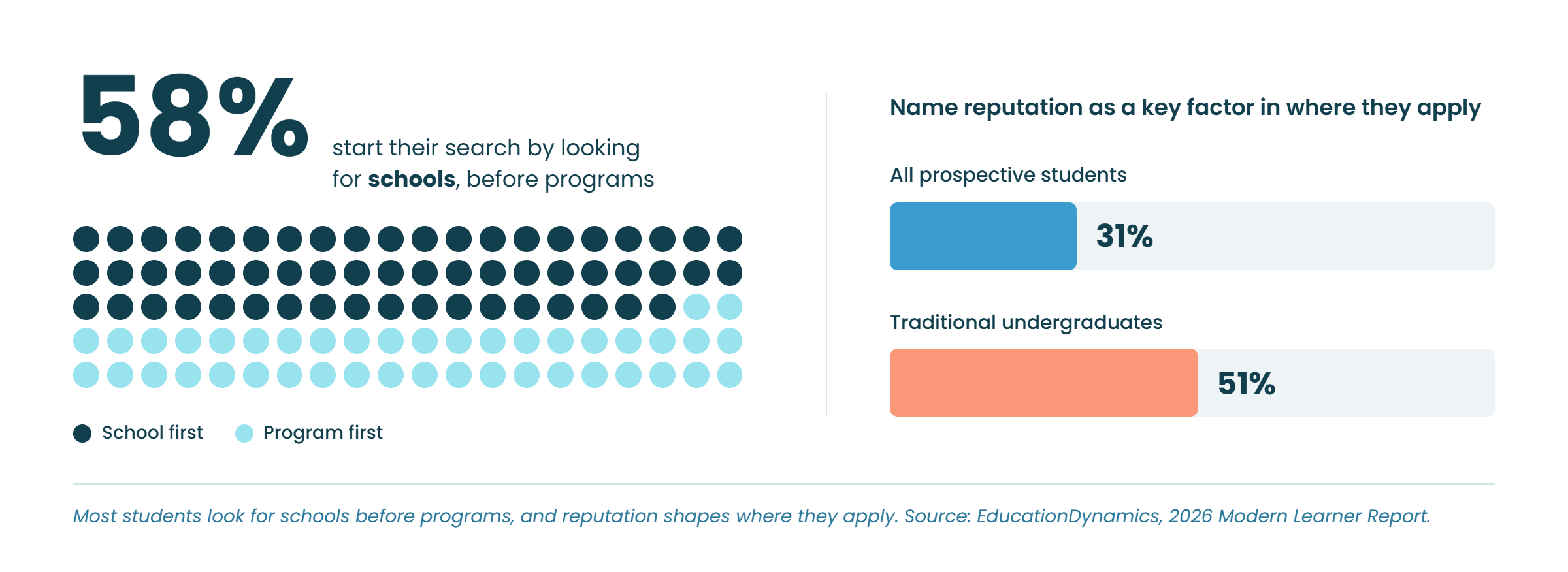
Recent research backs up why this matters before search even begins. EducationDynamics' 2026 Modern Learner Report found that 58% of students begin their college search by looking for schools before they look at specific programs. The same research found that 31% of all prospective students name a school's reputation as a key factor in where they apply, a figure that climbs to 51% among traditional undergraduates. A school missing from that early list rarely earns a second look once the student starts typing.
The mechanism itself is simple. Digital tactics introduce a name to a stranger. In-school presence reinforces a name already tied, even loosely, to a place a student associates with routine. That difference in trust shows up the moment a search result appears on screen.
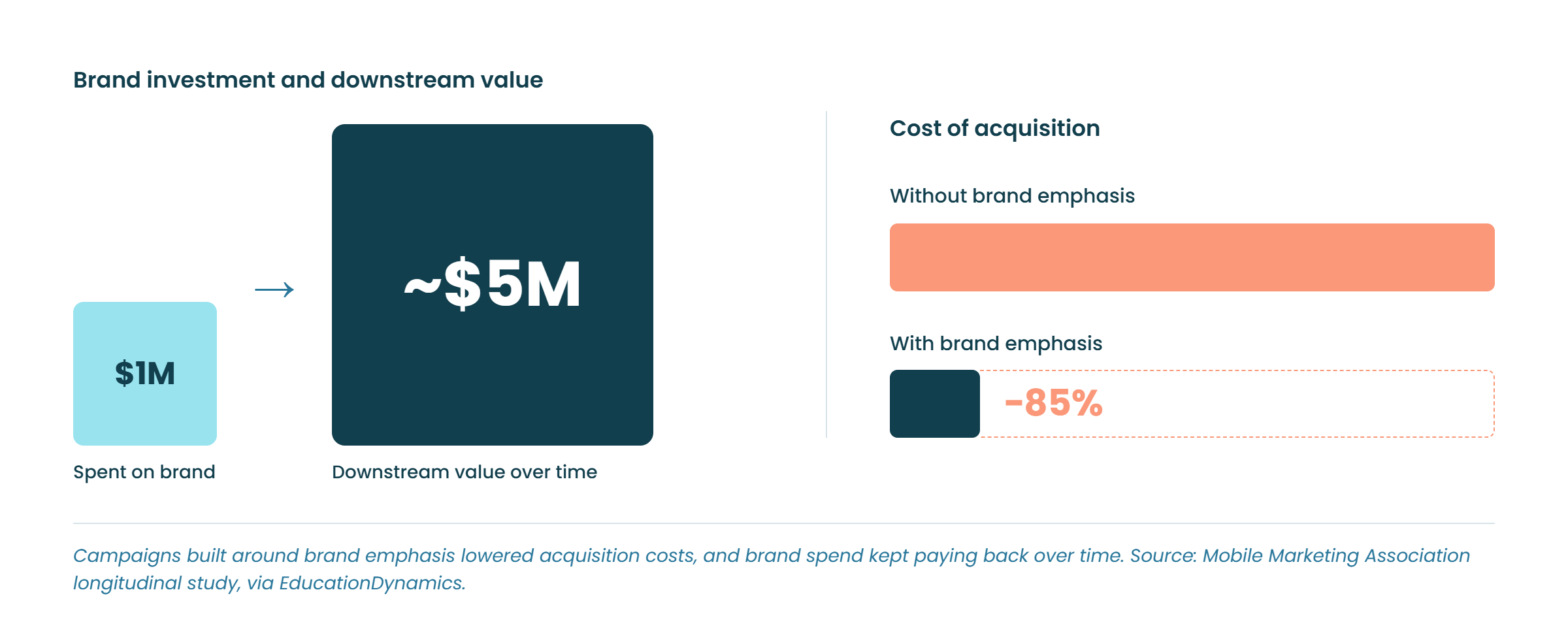
Brand investment research points to the same conclusion from a budget angle. The Mobile Marketing Association's multi-year longitudinal study, covered by EducationDynamics following its presentation at POSSIBLE 2026, found that campaigns built around brand emphasis cut cost of acquisition by 85%. Every $1 million spent on brand building generated close to $5 million in downstream value over time. Institutions that treat awareness as the first line item to cut in a tight year often end up paying full price for every application later. No one built the recognition that would have made those later touchpoints work harder.
In-school visibility and digital marketing work in sequence. Search, retargeting, and inquiry nurture sequences all perform better against a name a student already half-recognizes, and that half-recognition gets built in the building where students spend most of their day, long before decision season and long before the first search.
The real test for an enrollment team is whether a name already means something to the student before she opens the search bar.
Want to dig deeper into how sustained in-school presence builds that recognition over time? Read our ebook, Why Visibility in High School Isn't Optional Anymore.
