

How Higher Education Marketing Teams Should Measure School Advertising
School advertising is difficult to measure with traditional attribution models because the student journey doesn’t create the data those models need. Students see a school inside their environment, continue researching over months, and eventually apply through dozens of different touchpoints.
That makes awareness difficult to reduce to a single number. The reporting model assumes a short path between seeing an ad and taking action. Student recruitment rarely works that way.
Why Does School Advertising Campaign Performance Resist Standard Attribution?
Attribution breaks down for in-school and awareness campaigns because the channel doesn’t meet the two conditions attribution needs: a persistent identifier and a short window between exposure and action.
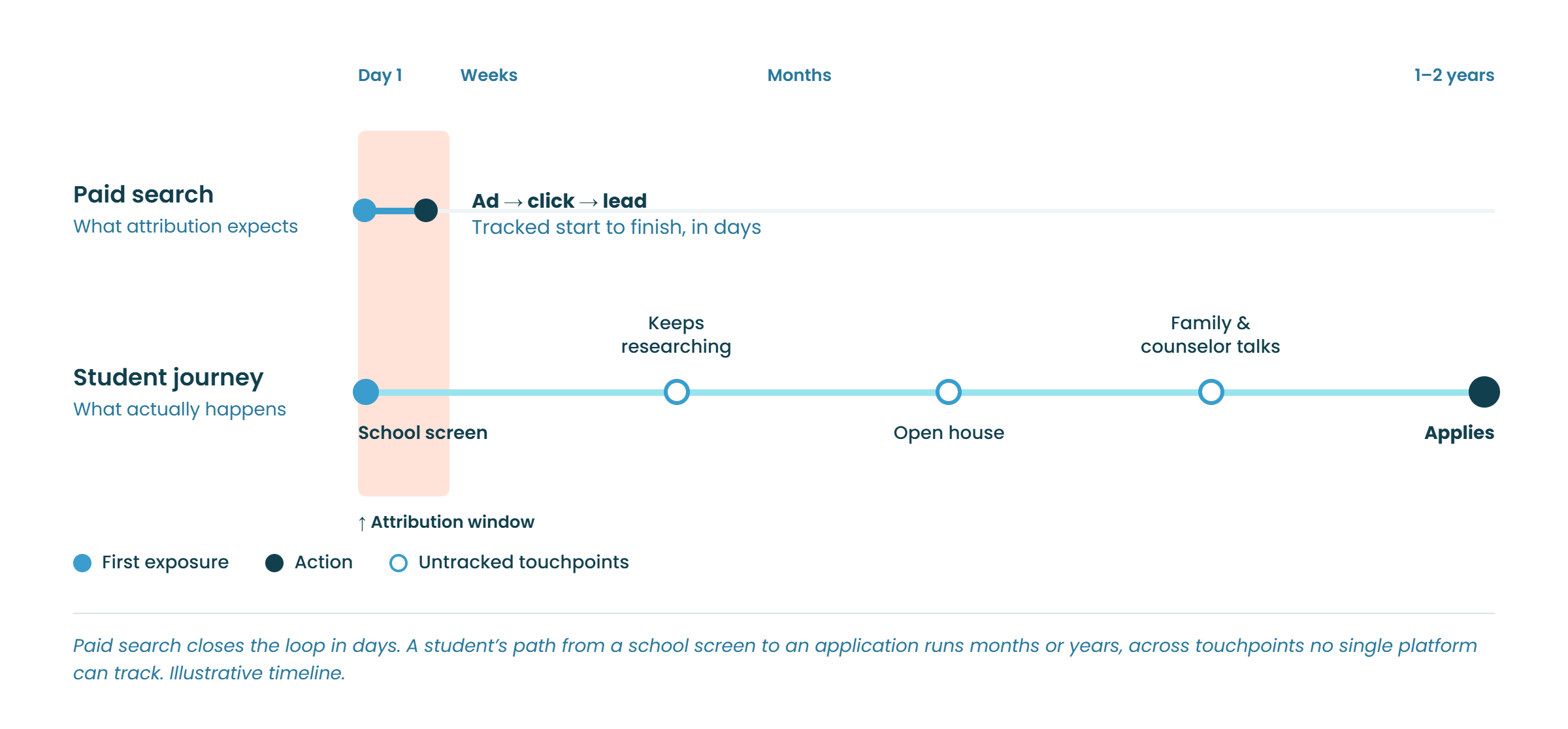
Students under 18 are protected by targeting restrictions that limit persistent tracking, making it difficult to connect an individual to a later application.
The timeline creates a second challenge. A student might see a campus name in a school hallway, continue researching weeks later, attend an open house, talk with family and submit an application months or even years after that first exposure.
The decision develops across physical and digital touchpoints, and no single platform sees across the full journey.
Click-based attribution works best when people move quickly from seeing an advertisement to taking action. Student recruitment usually unfolds over a much longer period.
What Data Gaps Make Campaign Tracking Challenges Worse?
Platforms log what a campaign delivered. Campaign reporting captures activity during the reporting period.
A fall recruitment campaign might run from September through November. By the time it ends, the reporting shows impressions, screen plays, engagement, and any QR code scans generated during the campaign.
The students who saw those messages are still making decisions. Some continue researching over the winter. Others attend an open house the following spring. Many don’t submit an application until the next recruitment cycle. Those decisions happen long after the campaign reporting has been finalized.
Marketing teams often need to explain both parts of that timeline. Campaign reporting describes what happened while the campaign was live. Recruitment reporting reflects decisions made months later, after students has compared institutions, spoken with family, attended events, and chosen where to apply.
Both reports matter. They describe different stages of the same recruitment journey.
Why Don’t Performance Metrics Built for Paid Digital Transfer to School Marketing ROI?
Performance metrics like cost per lead, click-through rate, and conversion rate were designed for channels where people respond quickly after seeing an advertisement. School advertising follows a different decision cycle.
Students rarely move from seeing an institution to submitting an application in a single step. They encounter the same institution over time through multiple experiences, including school, search, social media, campus events, conversations with family, and guidance counselors. Each interaction builds familiarity before a student is ready to make a decision.
Performance reporting still plays an important role in marketing. It describes how a campaign performed during the reporting period. Awareness reporting answers a different question: whether an institution maintained visibility while students were deciding where to apply.
Marketing leaders are often asked to explain awareness using the same reporting frameworks as a paid search or paid social. Those conversations become easier when the purpose of the campaign and the purpose of reporting are aligned before budget discussions begin.
How Can Education Marketers Evaluate Campaign Impact With Better Advertising Analytics?
A defensible measurement approach for this channel starts with correlation instead of attribution:
Compare interest and application trends in markets with consistent school-based coverage against markets without it, over the same recruitment cycle.
Track share of voice inside named feeder schools over time, rather than isolated campaign snapshots.
Build a reporting cadence a leadership team reviews in a couple of minutes, not a dashboard that needs a training session to interpret.
These approaches supplement attribution data where it’s available, giving marketing teams a way to evaluate awareness investment on terms that match how the channel behaves.
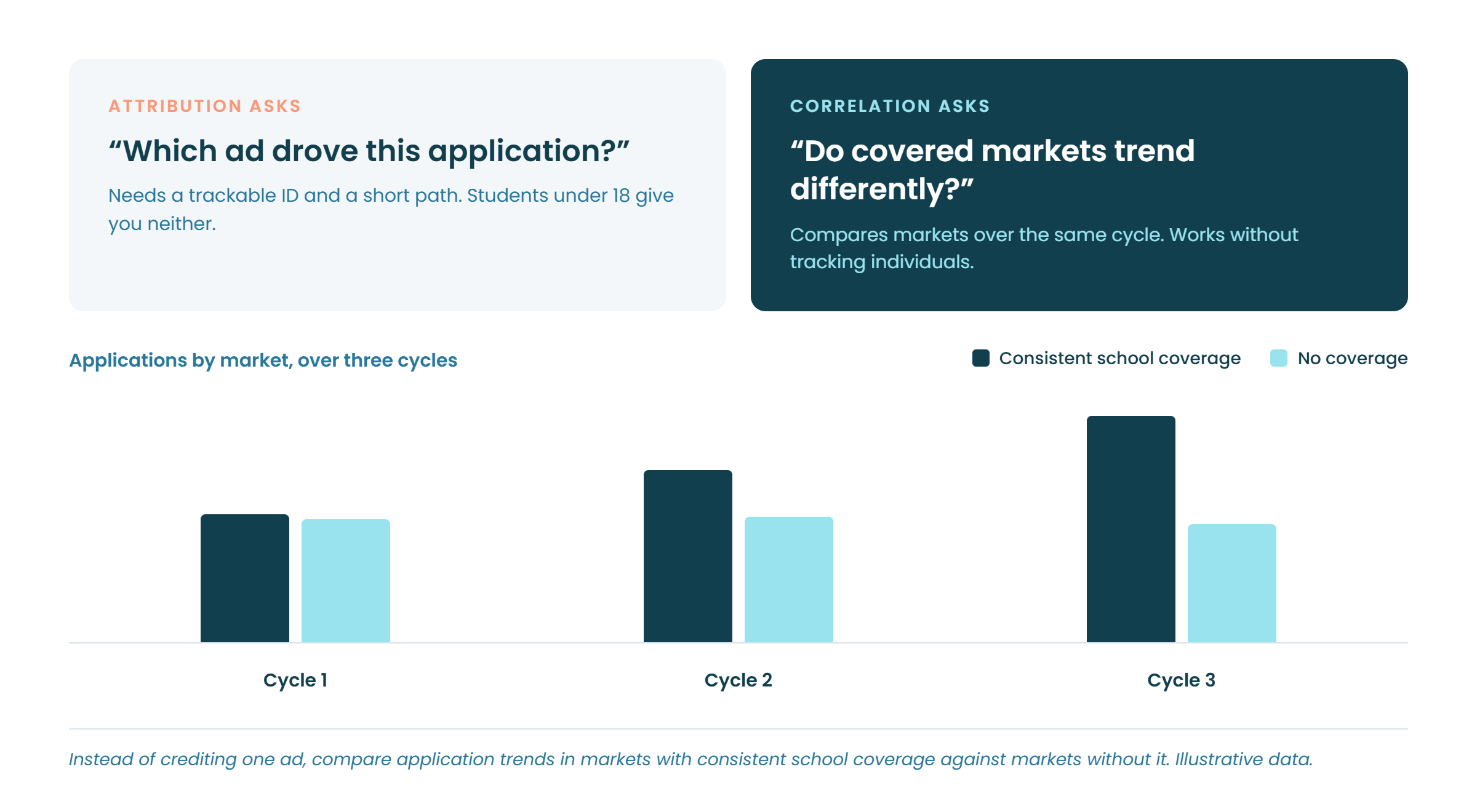
Measurement difficulty here is a reason to evaluate the channel on its own terms.
The question for education marketing teams is whether the institution stayed visible in the schools that shape its enrollment pipeline while students were making decisions. Awareness often shows up in the data long before the student reaches out. The cost of missing that student usually appears much later, if it appears at all.
That pattern extends beyond in-school advertising. Awareness campaigns across higher education follow the same long decision cycle.
