

In-School Digital Bulletin Board Advertising: A Guide to College Outreach
In-school digital bulletin board advertising places college messaging directly inside high school hallways, on screens students walk past every day. For higher education marketing teams, that means program awareness lives where students already spend time, alongside the email sends and paid campaigns already running.
What is In-School Digital Bulletin Board Advertising?
In-school digital bulletin board advertising is a network of screens installed inside high schools that rotate college and university content on a set schedule. The screens sit in hallways, cafeterias, and guidance offices, the same spaces where paper posters used to hang.
OnDeck’s network runs on a closed system inside the school’s own infrastructure, with no cameras or student data collection. That distinction matters to school boards and counselors, who evaluate any new vendor on how much oversight setup it demands from their side.
For marketers, the format offers something rare: a physical presence inside the building where prospective students spend 30+ hours a week.
Why School Advertising Works Differently From Other Channels
Most digital advertising runs on a timeline tied to a budget. The campaign launches, spends, and ends. School advertising through in-building screens work on a different clock.
A digital board installed in a school hallway keeps showing content through the full academic year, across every enrollment cycle a student moves through, from freshman year to the college search.
That difference is why digital signage in schools gets used less as a short campaign tactic and more as a standing presence. Students see the same institutions represented consistently across grade levels, across the full school year, not a single recruitment push in the fall.
How Digital Signage in Schools Supports Recruitment Messaging Across Channels
A digital board rarely works as a standalone tactic. Its real value shows up when it reinforces messaging students are already seeing through email, paid social, and search.
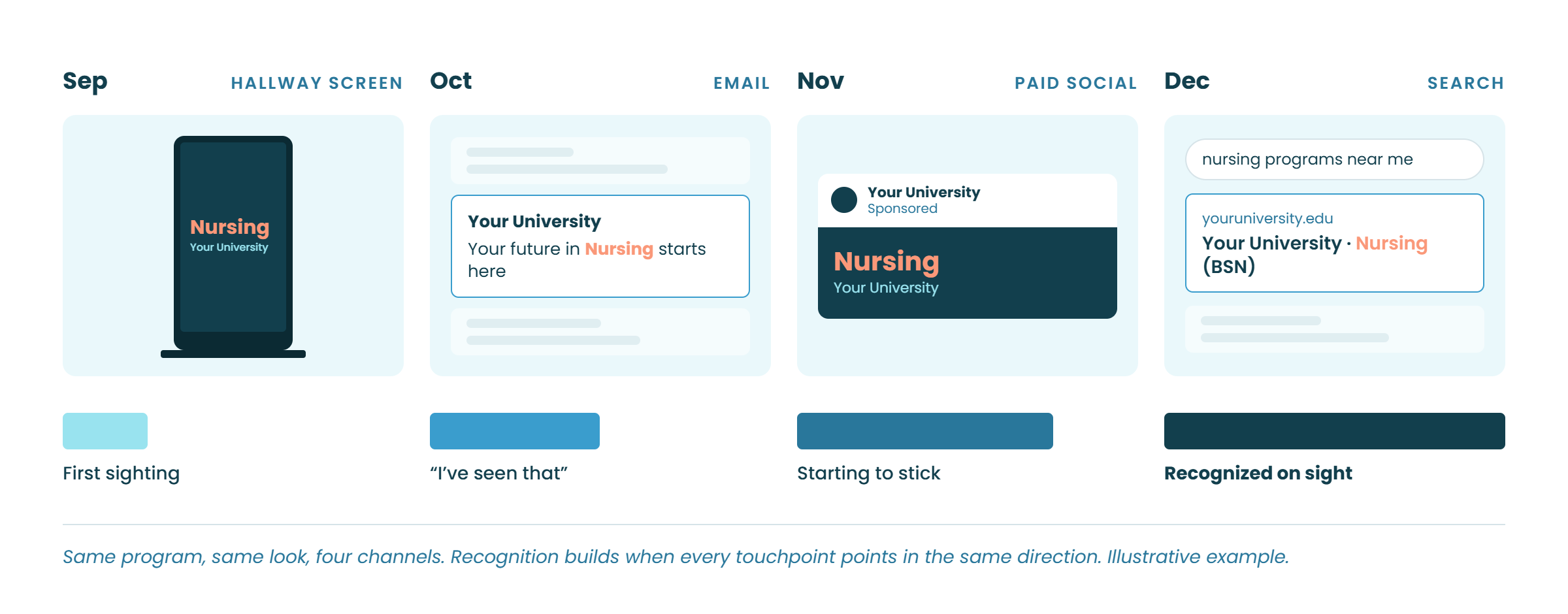
A student who sees a program name on a hallway screen in September and receives an email referencing the same program in October is building recognition across two separate touch points. Recall builds through repetition and consistency, not through any single channel carrying the full weight of the message.
Matching creative and program focus across channels keeps that repetition working in the same direction. A screen promoting a specific major alongside a paid social campaign for the same program gives a student two chances to register the name before they ever open an application.
How to Use In-School Digital Boards for College Student Recruitment
A few practices separate an institution getting value from a screen network from one treating it as a static poster:
Match screen content to active campaigns. Feature the same program or event that paid search and email are promoting that month for a consistent, recognizable message.
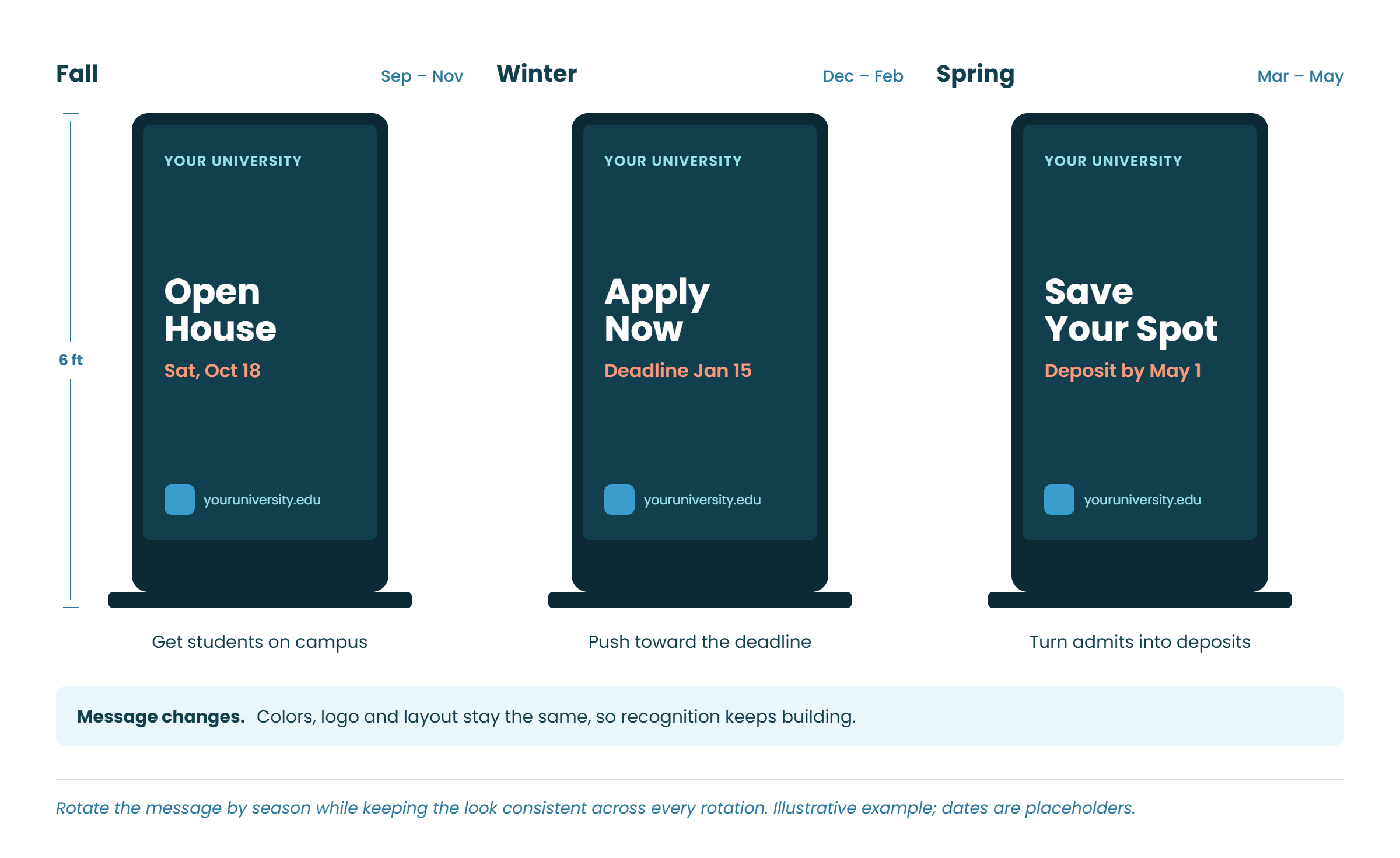
Rotate creative by season. Open house dates in fall, application deadlines in winter, deposit reminders in spring. Content that stays static for a full year gets ignored the way an outdated poster does.
Keep visuals consistent across rotations. Use the same colors, logo, and program imagery each time a slide appears. Repeated visual exposure builds recognition over the school year, even for students who never stop to read the full placement.
Prioritze feeder schools first. High schools with a history of sending students to your institution deserve consistent screen presence before broader, lower-yield placements.
None of these steps require a new team or a new dashboard. The screen content update is usually a single graphic (or short video) sent on a monthly or seasonal schedule.
What Student Action Looks Like on a Digital Board Campaign
In-school digital boards work as a presence and awareness layer, and setting that expectation internally from the start helps everyone measure success the right way. The value shows up in different signals: a student who asks a counselor about a school they only recognized because of the screen, a name that feels familiar when it shows up later in a search result or an email subject line. By the time that student starts a formal search, the logo is already one they know.
Those signals show up in recognition and recall rather than in a single report, they carry real weight. Awareness built early in a student’s high school years shows up later, when that student starts a formal college search and already has a shortlist of names in mind.
Common Questions About In-School Digital Bulletin Board Advertising
Does digital signage in schools replace other marketing channels? No. It works alongside paid search, email, and social as a presence later that reinforces the same institution names and program messages a student sees elsewhere.
How is in-school digital bulletin board advertising different from a paid digital campaign? A paid campaign stops delivering the day the budget ends. A screen installed in a school hallway continues showing content through the academic year, giving an institution a standing presence rather than a limited flight.
What should appear on a digital board? Program names, application deadlines, open house dates, and consistent branding students can recognize across the school year. Content tied to what’s active in other channels performs better than a general institutional message.
A screen hallway will not close an enrollment class on its own. What it does is make sure your institution’s name is a one student already recognizes by the time they start the search that matters.
