

Low engagement in student recruitment ads often starts with a mismatch between these students an institution wants to reach and the audiences its media channels reliably reach. High school students are especially difficult to reach consistently through paid digital, making feeder-school coverage, audience context, and sustained visibility important parts of recruitment planning.
The most common targeting mistakes include casting too wide a geographic net, relying too heavily on digital audience definitions, overlooking the adults who influence students, prioritizing audience size over school-level coverage concentrating visibility around application deadlines.
1. Targeting students broadly instead of prioritizing feeder schools
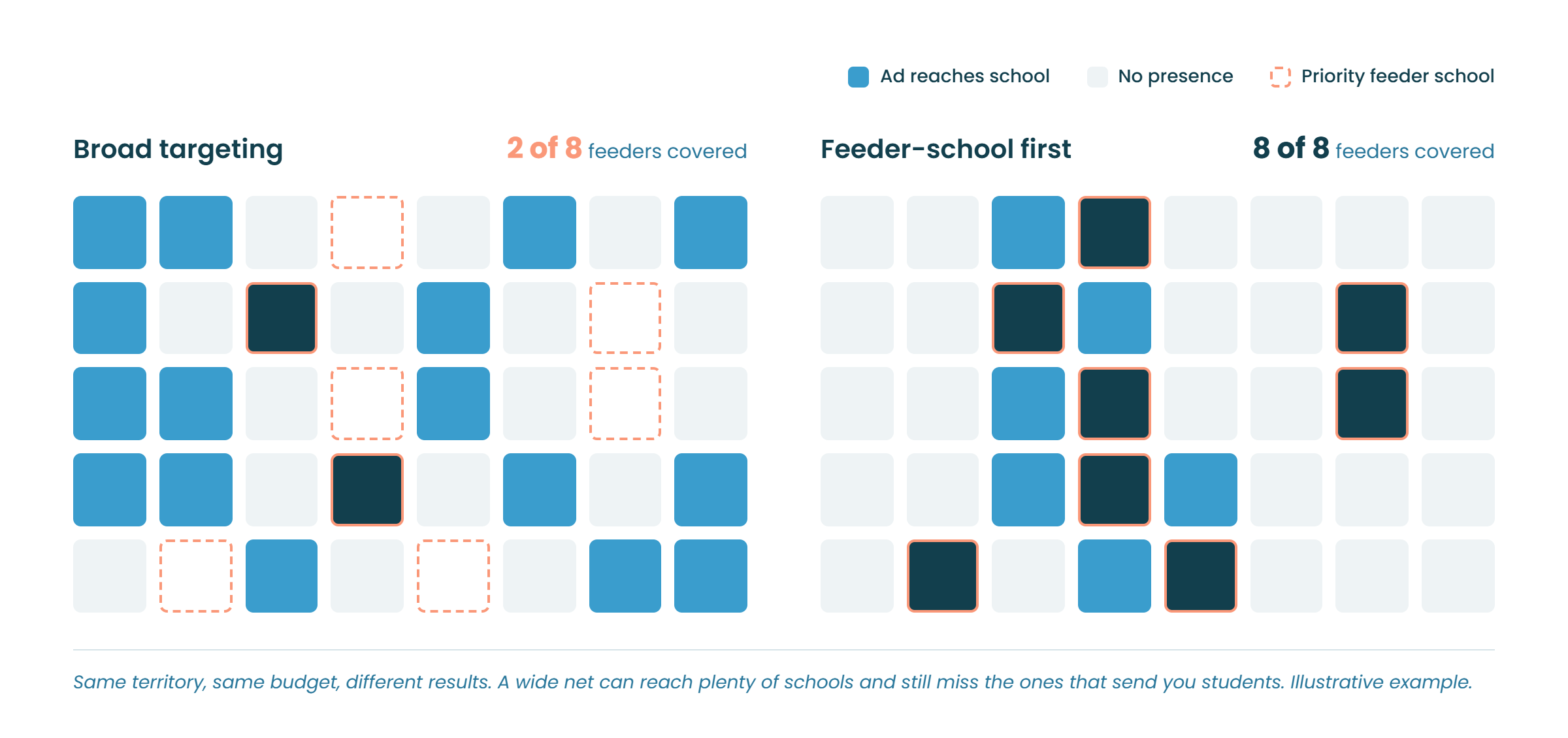
Many campaigns set a wide geographic and demographic net aimed at high school students in general, without checking which schools actually send students to the institution each year. That can create broad reach while leaving priority feeder schools under-covered.
Feeder-school data gives institutions a more useful starting point for defining recruitment territory. It identifies the schools where visibility matters most and helps marketing teams make deliberate decisions about where awareness coverage needs to remain consistent.
2. Assuming digital targeting reliably reaches high school students
Age restrictions and platform limitations make high school students difficult to reach consistently through paid digital. An institution may know exactly which students it wants to reach and still have limited way to reach them reliably through traditional targeting.
That makes school-level coverage an important part of recruitment planning. Institutions need to know whether they have a dependable way to stay visible inside the priority schools where prospective students already spend their time.
3. Leaving counselors and families out of the audience
Campaigns aimed only at students aged 16 to 18 overlook adults who influence post-secondary consideration. Counselors, teachers, and families all play a role in helping students understand their options and narrow the institutions they consider.
Recruitment visibility matters beyond the student audience. Presence inside the school environment also puts the institution in a setting shared by the counselors, teachers, and other adults involved in post-secondary conversations.
4. Prioritizing audience size over school-level coverage
Large audience numbers can make a recruitment plan look comprehensive without showing whether the institution is visible in the schools that matter most. For high school recruitment, the location of that visibility matters.
Start with priority feeder schools and recruitment territories, then assess where the institution has consistent presence. This creates a more useful picture of awareness coverage than aggregate audience estimate alone.
5. Limiting student recruitment advertising to peak recruitment periods
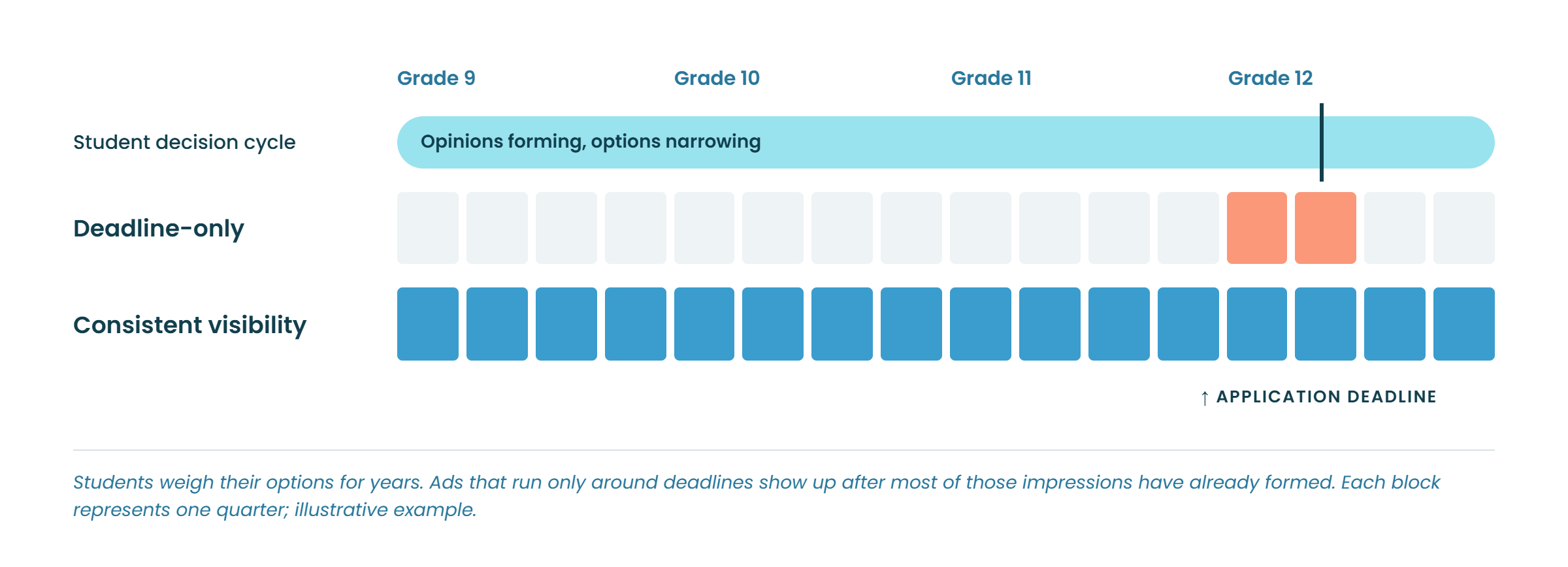
Many institutions turn ad targeting for a few weeks around application deadlines and pause the rest of the year. That creates periods when prospective students have fewer opportunities to encounter the institution while they’re still forming opinions and considering their options.
Students form opinions about post-secondary options over a long decision cycle. Consistent visibility gives an institution more opportunities to become familiar before application deadlines arrive.
How should colleges improve student recruitment targeting?
Start with the schools that matter most to the institution’s enrollment strategy. Identify the priority feeder schools and recruitment territories, then assess whether the current media mix provides consistent visibility in those places throughout the student decision cycle.
That gives marketing teams a defensible way to talk about awareness internally. They can show leadership where the institution is maintaining presence, which priority schools have coverage, and where visibility gaps remain.
Frequently asked questions about student recruitment targeting
Why is it difficult to target high school students with digital ads?
Age restrictions and platform limitations make high school students difficult to reach consistently through paid ad digital advertising. Colleges need to account for those limits when deciding how they’ll maintain visibility among students in priority schools.
What role do feeder schools play in student recruitment targeting?
Feeder schools help colleges identify where student recruitment visibility matters most. Using feeder-school and recruitment data gives marketing teams a defined set of schools where they can assess whether the institution has consistent awareness coverage.
Should colleges advertise to prospective students year-round?
Students consider post-secondary options over a long decision cycle, so concentrating visibility around application deadlines leaves gaps during the months when opinions are still forming. A consistent presence gives students more opportunities to become familiar with an institution before they’re ready to make a decision.
