

Most enrollment teams define a college-bound student by what that student has done: written an entrance exam, filled out an interest form, visited a campus, or opened an email. By the time a student does any of those things, they've usually started a short list.
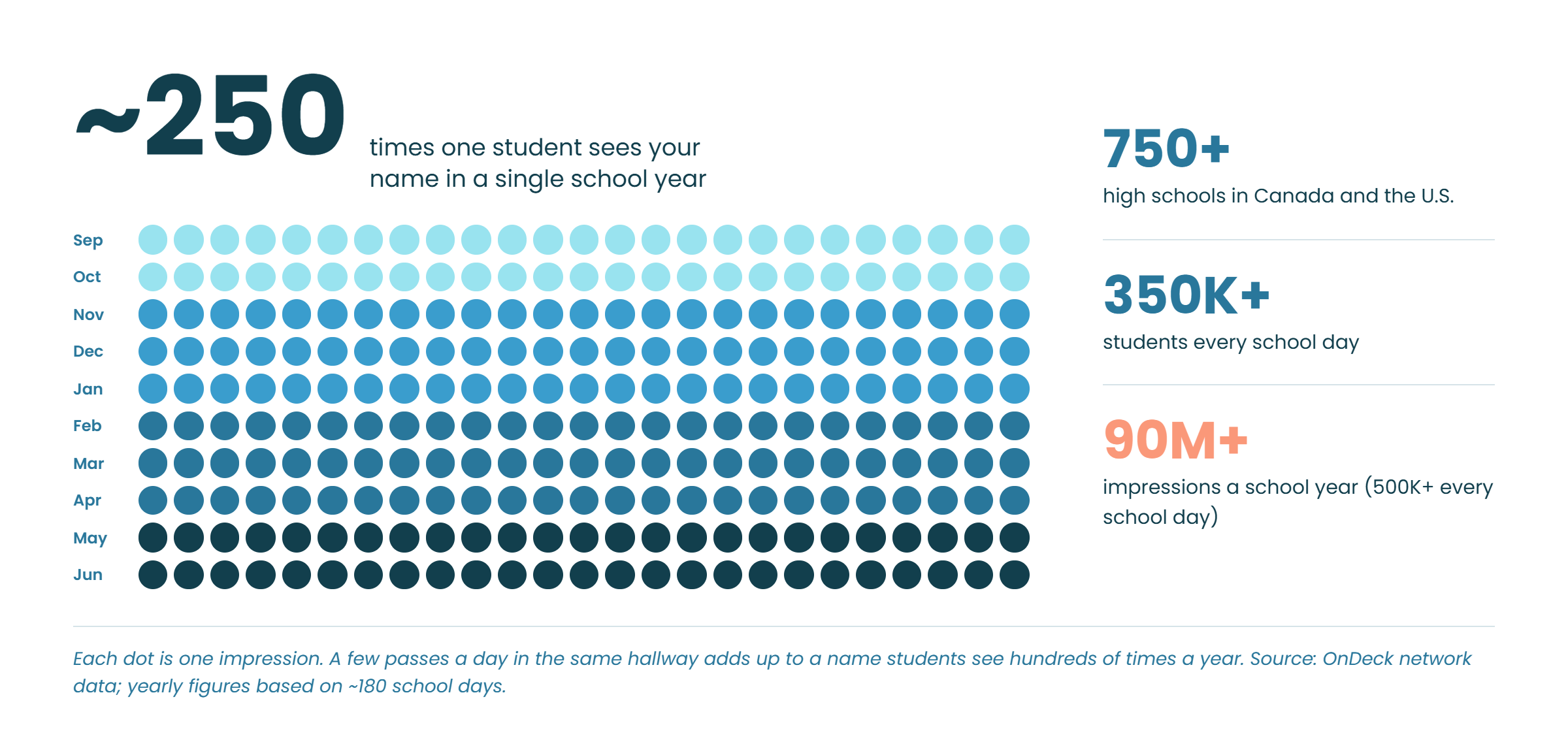
That's why more colleges and universities now advertise inside high schools, on screens in the hallways of their feeder schools. At OnDeck, we run an in-school screen network across 500+ high schools in Canada and the U.S., reaching 350K+ students every school day. Here's how we think about reaching students before they call themselves college-bound, and what makes in-school advertising effective.
When do students start forming college preferences?
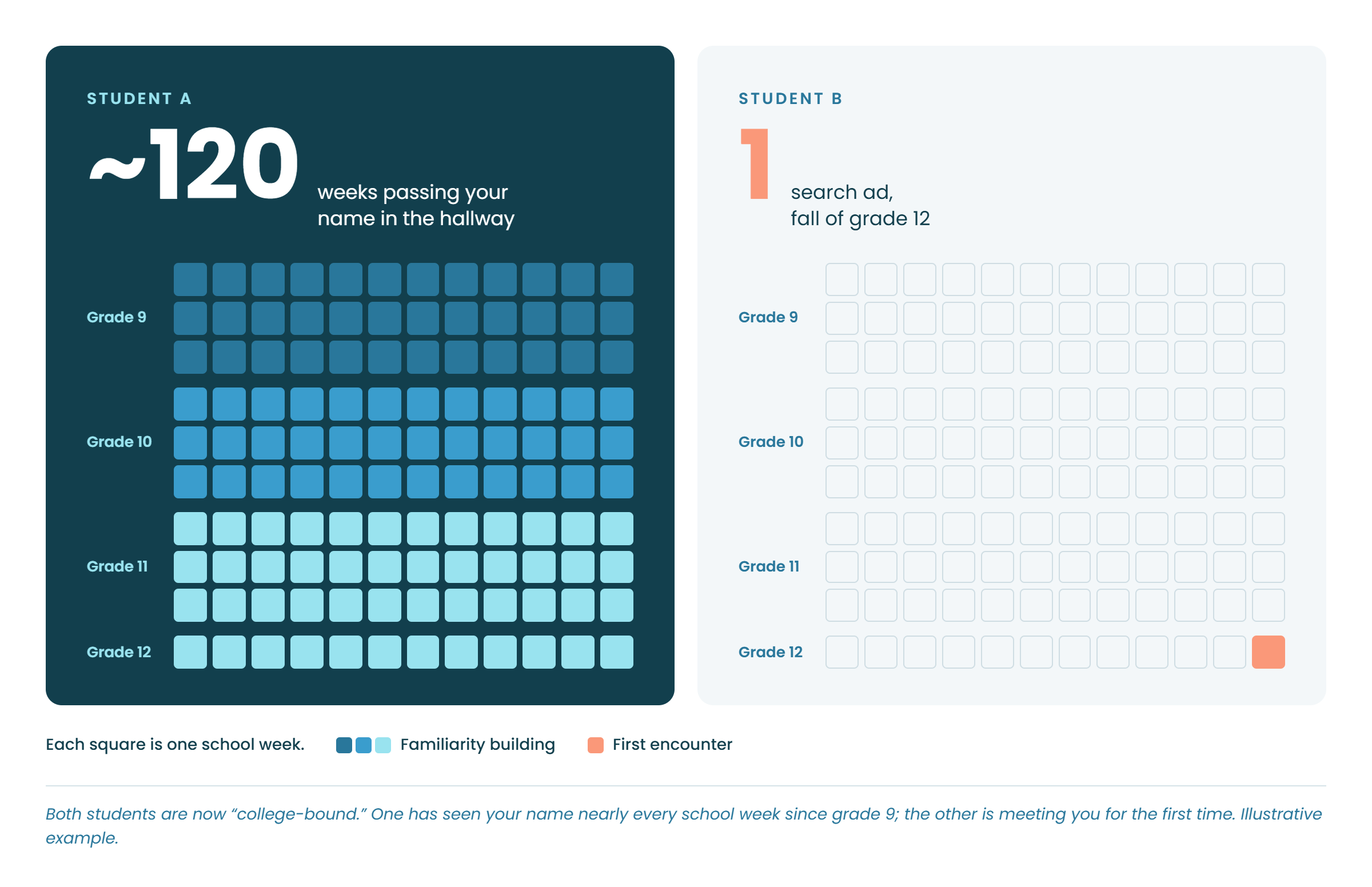
Years before they apply. A grade 10 student who passes your name in the hallway every week walks into grade 12 with a sense of who you are. A student who meets you for the first time in a search ad that fall is weighing you against schools they've known since grade 9.
That makes "college-bound" a weak targeting filter. It describes students late in a process your brand needed to join early.
It also explains why awareness problems surface late. Lost visibility shows up in application data months or years after it starts, as softer brand recall and fewer students who think of you at all.
Why is it hard to reach high school students with digital ads?
For most of the school day, digital has limited access to them. Major ad platforms restrict how advertisers target users under 18, and provinces including Ontario and Alberta limit phone use during class time. That leaves roughly 6 hours a day when students sit in the building that shapes their plans.
We pair our screens with digital campaigns because each covers what the other misses. The hallway builds familiarity during the school day, and digital carries that presence into the rest of the week and the months between recruitment windows.
What makes in-school screen advertising effective?
The screen is the easy part. Effectiveness comes from what surrounds it.
Repetition in a familiar space. Students walk the same hallways every day, so a message builds familiarity the way a landmark does. Across our network, 350K+ students generate 700K+ impressions a day, roughly 2 per student.
The right schools. Presence matters most in the schools that feed your enrollment. Other institutions want the same students, and the brands that show up there every term build preference a once-a-year visit struggles to match.
Staying on between campaigns. A 6-week fall campaign fades by spring, and the grade 10 students in the building that fall barely registered it. Always-on presence reaches each class as it moves through the school, and it holds through budget reviews because it runs with light ongoing management.
Creative built for a walking audience. Students see a screen mid-stride, so a message has a few seconds to land. Video-first formats work best in that window, and rotating creative by school or by month keeps a familiar brand from turning into wallpaper.
How do you know in-school advertising is working?
Watch trends over time. Compare application activity in covered markets against markets outside your in-school footprint, and track it across terms. The relationship you're looking for is correlation.
Any partner promising click-level attribution from a hallway screen is overselling the channel.
Where to start
Start with your list of feeder schools. For each one, ask how often a student in that building sees your name in a typical week, and whether that number holds between campaigns. The schools where the answer is "rarely" are the ones where another institution is building the preference you'll compete against in grade 12.
If you want to see which of your feeder schools sit inside our network, get in touch!
