

Your Creative Has 2 Seconds. Here's What Works.
A look at the content patterns we see working across our network, and why they earn attention when most things don't.
High school hallways are not quiet places.
Students move fast, phones are out, conversations are happening. Anything on a screen has about two seconds to earn a look before it's gone. We've watched a lot of content succeed at that, and a lot more miss entirely.
After running creative from colleges, universities, and youth-facing organizations across hundreds of schools, the patterns are clear. It's not production quality that determines what lands. It's not brand recognition either. It's how well the content meets students at whatever they're already thinking about.
Here's what we see working.
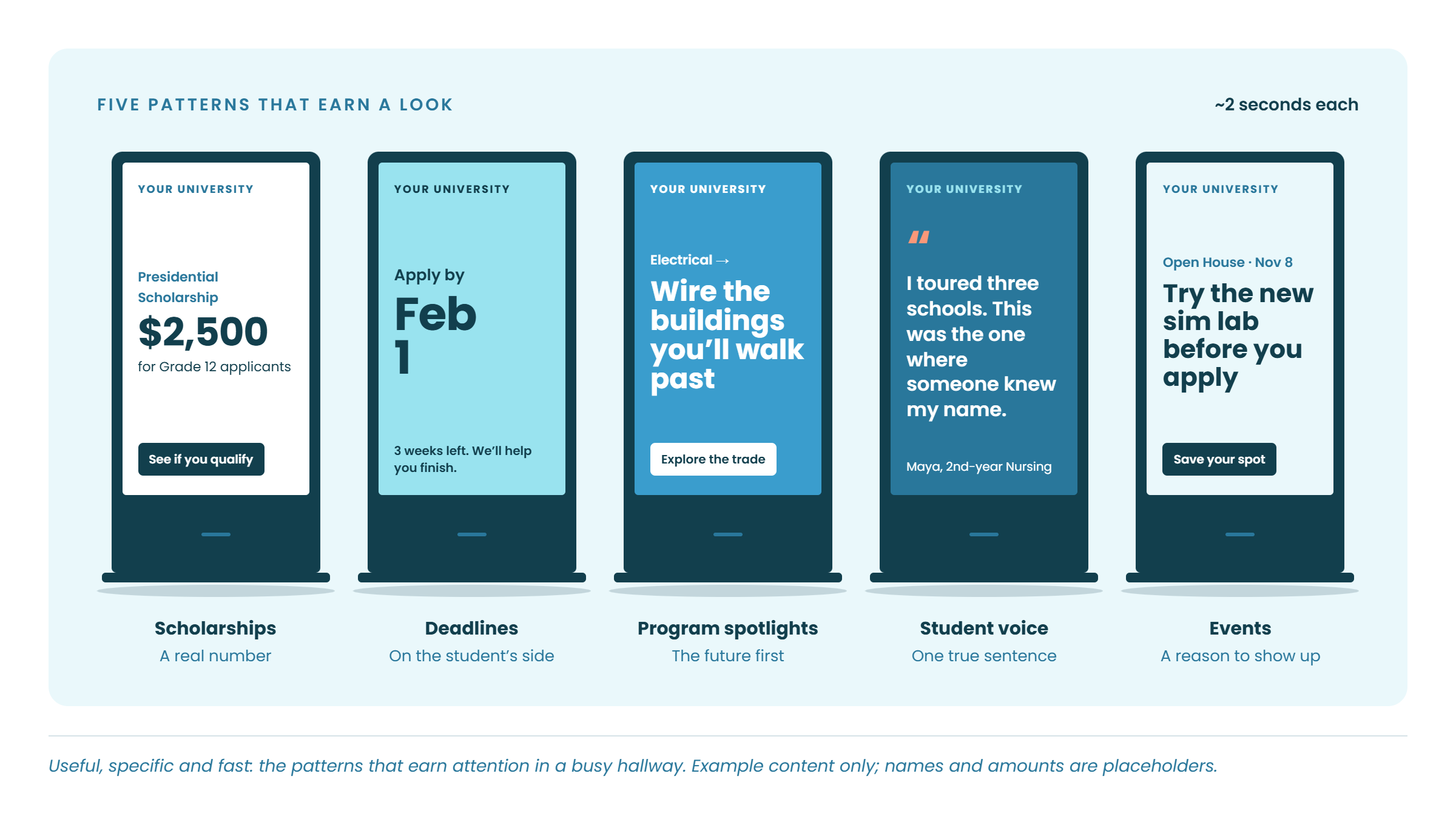
Scholarships and financial aid earn consistent attention
This one isn't surprising once you think about it from a student's perspective. Money is the most concrete barrier they associate with higher education. When a piece of creative leads with a specific dollar amount tied to a real opportunity, students stop.
The key word is specific. Vague references to "funding opportunities" or "financial support" don't register the same way. A named scholarship, a real number, a clear next step. That combination earns attention consistently across school types and grade levels.
Deadline content is useful, and students know it
Urgency works on screens. But deadline content performs for a reason beyond urgency. It's genuinely helpful to students, not just to the institution running it.
The schools that use deadline reminders well aren't advertising. They're helping students stay on track during the busiest stretch of their year. That comes through in the creative. Students respond to content that's on their side.
Program spotlights work when they lead with the future, not the institution
Students don't choose schools the way institutions hope they do. They choose fields, careers, and versions of their future. Content that leads with a specific program or career path consistently outperforms content that leads with a name or ranking.
The formats that hold attention: outcome-focused headlines, short descriptions of what a program looks like day-to-day, anything that connects a field of study to a career students already recognize. Trades, healthcare, STEM, and creative industries generate strong recall, not because they're inherently more interesting, but because students in those areas rarely see themselves reflected in traditional recruitment materials.
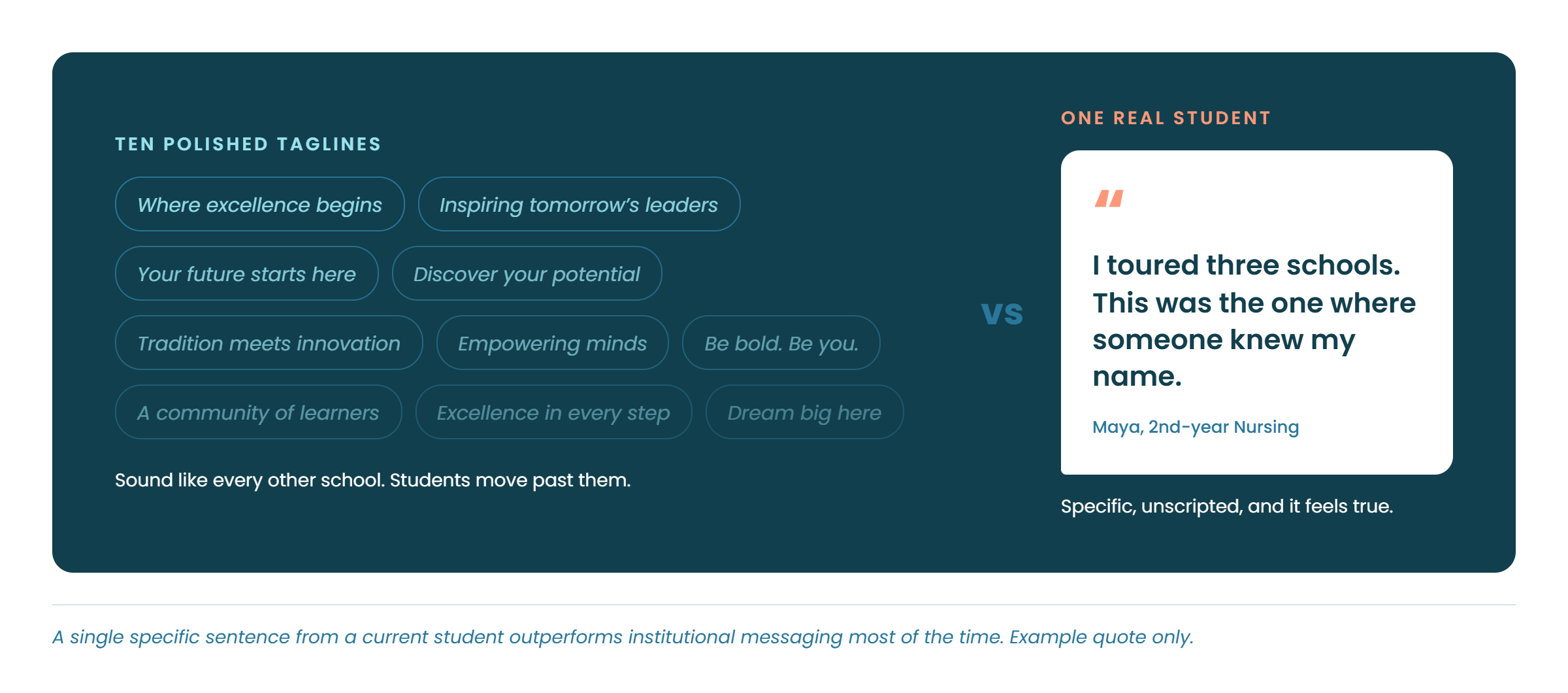
One real student voice beats ten polished taglines
Students are skeptical of marketing. They're not skeptical of someone who sounds like them, talking about something real.
A single sentence from a current student, specific and unscripted, outperforms institutional messaging most of the time. It doesn't need to be produced. It needs to feel true. Short, direct, grounded in a real experience.
Event content needs a reason, not just a date
Open houses and campus tours drive strong visibility when the creative is specific. A date, a location, and something worth showing up for. Students aren't looking for inspiration from a poster. They're looking for a reason to take the next step.
The most effective event content pairs the practical detail with something worth anticipating: a new facility, a chance to meet faculty in a field they're already interested in, or an experience they can't get from a website visit.
The thread that connects all of it
The content that earns attention was built for the student standing in front of that screen, not for the institution's internal communication goals.
These screens live inside a student's daily environment. The content that works respects that. It's useful, specific, and fast. It doesn't ask for much. It just needs to leave something worth remembering.
The harder question isn't what to put on the screen. It's how to keep showing up consistently enough that it compounds into something students recognize. That's where presence becomes more than a campaign.